
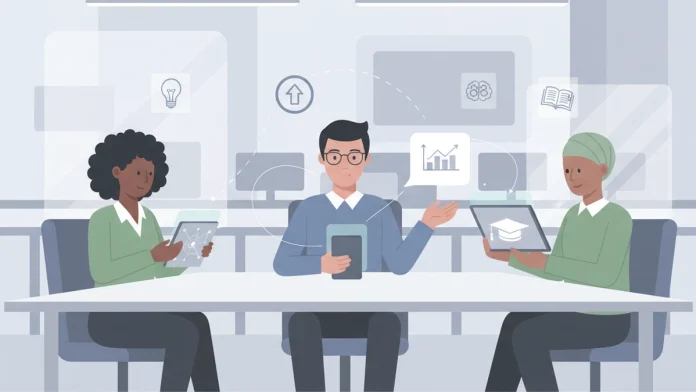
On a recent Tuesday morning, an operations manager in a logistics firm told me how her team learned a new safety update. No workshops. No slide decks. Just a two-minute clip sent to their phones before a shift change. By lunch, everyone was already using the new procedure.
Scenes like this are becoming common across workplaces, from warehouses to software companies. Microlearning, once a niche idea in corporate training, is slipping into the everyday rhythm of work. Not loudly. Not as a grand reform. More like a practical response to how people actually learn when time is short and pressure is constant.
What’s happening now is less about innovation for its own sake and more about survival. Companies are training faster, hiring more frequently, and updating tools constantly. Traditional training models, built around long sessions and dense materials, are struggling to keep up. Workers feel it too. Many are overloaded before the learning even starts.
Microlearning fits into this tension almost accidentally. It doesn’t demand attention for hours. It asks for moments.
Talk to frontline employees and the appeal is immediate. A retail associate trying to remember a return policy. A nurse double-checking a device setting. A sales rep refreshing a feature demo before a call. These aren’t situations where anyone wants theory or background. They want clarity, quickly, and preferably without asking for help.
That’s where short, focused lessons are landing. A quick video. A short scenario. A single quiz question that forces a pause. On the ground, it feels less like “training” and more like assistance.
Managers are noticing a change in tone as well. Training used to arrive as a disruption. Now it blends into the day. Instead of pulling teams off the floor, companies push small updates at natural moments. Between tasks. Before meetings. At the end of a shift. Learning becomes something you dip into, not something you brace for.
The shift matters because work itself has changed. Fewer people sit at desks all day. More jobs rely on mobile access, shared systems, and constant updates. Microlearning seems built for that reality. It travels well. It doesn’t assume perfect conditions or long attention spans.
There’s also a subtle cultural change happening. Employees are more willing to engage when learning respects their time. Short modules don’t carry the same emotional weight as a mandatory half-day session. They feel optional, even when they’re not. That perception lowers resistance.
Some companies are experimenting with interactive scenarios that mirror real situations. Others add light competition, like small challenges or progress markers. But the most effective examples tend to be the simplest. A clear explanation. One task. One outcome.
What’s striking is how often microlearning fills gaps that formal training misses. Onboarding, for example, rarely ends on day one, no matter how many materials are shared. New hires forget details, hesitate to ask questions, and improvise. Short refreshers, delivered weeks later, often matter more than the original session.
Compliance training tells a similar story. Long modules are completed, certificates earned, and details lost. Short reminders spaced over time seem to stick better, not because they’re smarter, but because they arrive closer to the moment of use.
Still, microlearning isn’t magic. Poorly designed content just becomes more bad content, delivered faster. Employees notice when lessons feel rushed or disconnected from reality. The best programs tend to listen closely to support teams and frontline staff, adjusting content based on actual questions and mistakes.
What’s unfolding now feels less like a trend and more like a quiet recalibration. Workplaces are accepting that learning doesn’t need ceremony to be effective. It needs timing. Relevance. A sense that someone thought about the learner’s day before pressing send.
As work continues to fragment across locations, devices, and schedules, training will likely follow the same path. Smaller. Lighter. More frequent. Whether this leads to deeper learning or just better coping remains an open question. But for many workers right now, those small lessons are making long days a little more manageable.