

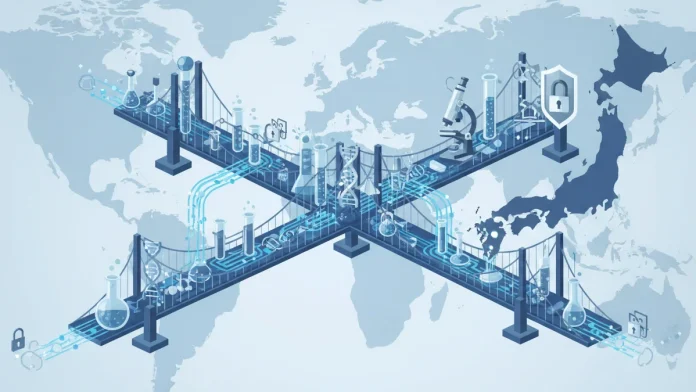
Something subtle is shifting in Brussels, and universities in Tokyo are paying attention.
The European Union is sketching out its next big research funding programme, known informally as FP10. On the surface, it’s a successor to Horizon Europe, the massive scheme that has poured billions into cross-border science. But the tone is changing. Words like competitiveness, strategic technologies and research security are cropping up more often than the easy language of open collaboration.
For Japan, this matters.
Only recently, Tokyo secured association with Horizon Europe, giving Japanese universities access to funding and partnerships on nearly equal terms with EU members. For researchers working on climate modelling, digital systems or public health, that agreement was more than symbolic. It meant larger consortia, shared infrastructure and a stronger international profile.
In labs from Kyoto to Tsukuba, European grants are seen as both a financial boost and a gateway. They connect Japanese teams to networks that stretch from Scandinavia to Southern Europe. Young researchers build careers on those links.
Now there’s a sense that the ground is moving, just slightly.
The EU’s new direction reflects a wider reality. Governments no longer treat research as a purely academic exercise. It sits closer to industrial strategy and national resilience. Advanced materials, semiconductors, space technologies — these are not just conference topics. They are tied to supply chains and economic leverage.
Japanese universities are not naïve about this. Many already align closely with national priorities around innovation and advanced manufacturing. Collaboration with Europe in areas like energy systems or next-generation computing still looks attractive. In some cases, it may deepen.
But there are questions. If future EU programmes attach tighter security conditions to certain calls, participation could become more complicated for non-member countries. Additional compliance requirements, stricter data governance rules, or limits around sensitive technologies may create friction where there was once fluidity.
Administrators quietly admit that paperwork has grown heavier in recent years. Research security reviews, export controls, intellectual property clauses. For large institutions with dedicated offices, that’s manageable. Smaller universities feel the strain more acutely.
There’s also a cultural dimension. Japanese academia has long operated in a relatively open environment. While the government has begun paying more attention to dual-use research and sensitive technologies, the system is not as securitised as in some Western countries. Academic freedom and international exchange remain strong values.
If Europe leans further toward strategic autonomy, Japanese institutions may become more selective. Not withdrawing, but choosing projects carefully. Looking at who else is in the consortium. Weighing the administrative cost against the scientific gain.
Beyond the EU-Japan relationship lies a broader pattern. Around the world, major research systems are recalibrating. The United States talks about technology competition. China invests heavily in domestic capacity. Europe emphasises sovereignty. Each move is rational on its own. Together, they risk nudging global science toward quieter fragmentation.
For a country like Japan, which depends heavily on international collaboration, that fragmentation is not abstract. It shapes where students study, where postdocs train, where patents are filed.
For now, cooperation between Europe and Japan remains strong. Joint projects continue. Conferences fill up. Researchers still speak the shared language of peer review and publication.
Yet beneath the surface, the incentives are evolving. The next European framework programme may not close doors, but it could narrow some of them.
In university corridors, the conversation is becoming less about where the funding is and more about the terms attached. That shift, gradual as it may be, hints at a future in which global science is still connected — just a little more guarded than before.