

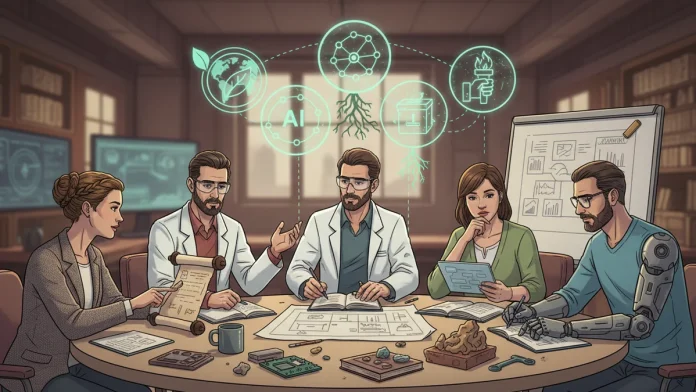
Step into a conference hall at Aalborg University in Copenhagen, and the usual hum of academic exchange carries a different tone. The discussion isn’t only about algorithms, climate models, or economic projections. It’s about how history, literature, philosophy, and language shape the way societies respond to crises. Across Europe, higher education leaders are asking a simple but urgent question: can the humanities guide humanity through the complexity of today’s grand challenges?
From 1 to 2 December 2025, 170 academics and policymakers from 30 countries gathered to explore this at the “Human Values and Grand Challenges” conference. The Danish and European organizers, including Copenhagen Business School and the University of Southern Denmark, were clear: social sciences, arts, and humanities (SSAH) must be more than an afterthought. They need to sit at the table alongside technology and science.
Henrik Halkier of Aalborg University noted that only 40% of Horizon Europe projects currently integrate SSAH perspectives. “It’s too low,” he said. “We can’t fix society’s biggest challenges with technical solutions alone. We need to understand the societal drivers that shape them.” For European researchers, this isn’t abstract. It’s about making innovations work in real communities without deepening divisions.
Participants painted a picture of universities experimenting with new approaches. Collaborative projects like the Nordic Humanities Center are pairing humanities scholars with societal institutions to tackle climate debates, inequality, and misinformation. The focus is practical: teaching students to analyze, write, and think critically while embedding these skills into missions that combine expertise from multiple disciplines.
Professor Hanne Leth Andersen of Roskilde University emphasized how humanities training builds resilience. “Understanding culture, ethics, and society is critical if we want citizens capable of nuanced judgment,” she said. With populism, polarisation, and rapid technological change, the humanities become not optional, but essential.
On the ground, the effect is tangible. Students involved in these programs report a sense of purpose, seeing their learning applied to societal questions rather than theoretical exercises. Faculty members are reshaping curricula to include dialogue, ethical reflection, and community engagement alongside technical coursework. Research funding is increasingly tied to projects that integrate social insight with innovation.
Yet challenges remain. Humanities programs have long been undervalued in Europe, often sidelined in favor of STEM priorities. Breaking through entrenched perceptions requires persistent effort from universities, governments, and research networks. The task isn’t just teaching more philosophy or history; it’s weaving these perspectives into decision-making, policy design, and technology deployment.
The broader implication is clear: solving the big problems of the 21st century—climate crises, social inequality, digital transformation—requires more than technical skill. It requires understanding people. The conference in Copenhagen signals a quiet but important shift: Europe is trying to put humanity at the center of its research and innovation strategy. Whether this momentum translates into lasting change depends on whether universities, funders, and policymakers invest in humanities not as decoration, but as a core lens through which society is understood and shaped.