

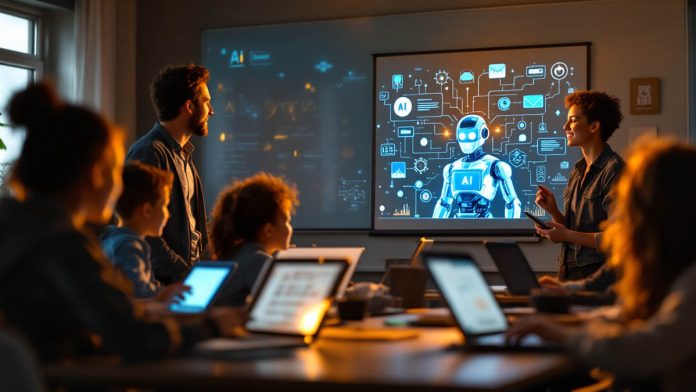
Almost three years into the ChatGPT era, the debates around artificial intelligence in education have only grown louder. From fears of students outsourcing essays to AI, to the excitement around using chatbots as interactive study partners, the educational landscape is grappling with how to integrate — or resist — this technology. While tech companies and outside experts push for rapid adoption, teachers in classrooms remain cautious, questioning whether AI prepares students for the future or simply distracts from core learning.
A recent participatory research project conducted by EdSurge Research in collaboration with Rethinking Schools sought to cut through the noise. By engaging 17 teachers from multiple countries and across grade levels, the project captured nuanced perspectives on how AI is impacting classrooms. Unlike broad surveys or industry reports, this initiative focused on authentic teacher voices, asking critical questions: Can AI tools foster student engagement and problem-solving skills? Are they a valuable addition to classrooms, or do they risk eroding cognitive development and creativity?
The findings reflect a divided, yet thoughtful, community of educators. According to a Pew Research survey in late 2024, one-third of teachers believe AI is harmful or equally harmful and beneficial for students, while another third remain undecided. By early 2025, student usage of ChatGPT for schoolwork had risen from 13% in 2023 to 26% in 2024, showing that despite hesitancy, adoption is growing. Meanwhile, a Walton Family Foundation survey revealed that nearly half of teachers using AI at least weekly believe the tools help students with critical thinking, problem solving, and engagement.
Still, concerns persist. Critics worry that heavy reliance on generative AI could weaken active recall, creativity, and independent problem-solving, all of which are vital to cognitive development. Research into productivity outcomes in professional settings provides mixed evidence: while some workers see time-saving benefits from AI assistants, others actually spend more time completing tasks. These studies, though not directly focused on education, suggest that AI’s value is heavily dependent on context, skill level, and task complexity. For classrooms, this raises questions about whether AI supports deeper learning or simply shortcuts it.
The international perspective adds another layer. According to the International Computer and Information Literacy Survey (ICILS), U.S. eighth graders perform near average in computer and information literacy compared to global peers, but lag by 22 points in computational thinking. This gap suggests that while basic digital skills may be adequate, higher-order problem-solving through technology is an area where American students are struggling. Advocates for AI integration argue that exposure to tools like ChatGPT could help close this gap, provided usage is structured and intentional.
Teachers participating in the EdSurge project highlighted both opportunities and risks. They emphasized the need for interactive AI lessons that prioritize collaboration, creativity, and ethical reflection rather than rote automation. Many expressed frustration that education debates are dominated by voices outside classrooms — consultants, corporations, and policymakers — while frontline educators are often sidelined. As one participant noted, the real challenge lies in determining whether schools are “teaching with tech, or teaching to the tech.”
In conclusion, the conversation around AI in education is far from settled. While AI-powered tools hold promise for enhancing engagement, streamlining support, and exposing students to emerging technologies, they also carry risks for cognitive development and equity in learning. The future of AI in schools will depend not on hype or fear, but on how thoughtfully educators, policymakers, and communities choose to implement these tools. Rather than rushing to integrate every new chatbot, schools must balance innovation with caution, ensuring that AI complements — not replaces — the essential human elements of teaching and learning.