

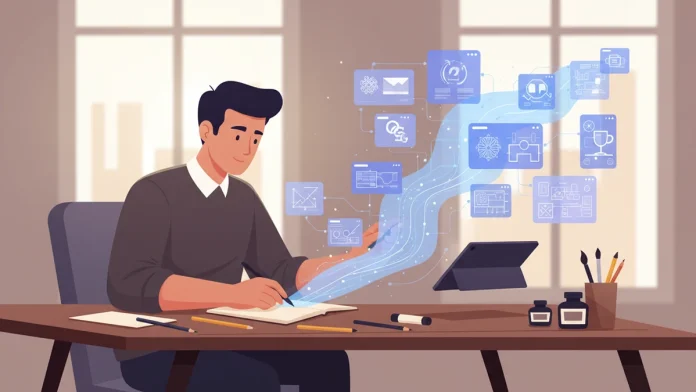
The designer draws a logo. Then she opens an AI tool to make logos in seconds. She does not use all of them. She changes one throws away three and does not like the rest. The AI tool has not taken her job.. It has changed how she spends her day.
A lot of things are changing in art, design, entertainment and media. Some research says that up to 26% of tasks in these areas can be done by AI systems. Not the whole job, some tasks. Like editing pictures writing drafts searching for information and fixing audio. These are the tasks that take a lot of time and are between the idea and the final product.
Many creative people like these tools because they are practical. Surveys show that most of them around three-quarters find these tools helpful. They are especially helpful for tasks that are repeated or technical. Of spending hours cutting out the background of a picture or looking for ideas they can work faster. Brainstorming is different now too. You put in an idea. You get many ideas back. Some are not good. A few are very good. The person still decides what to keep.
AI has been used in the art world for years. In 2016 The Next Rembrandt project made a Rembrandt” painting using a computer. Since then there have been exhibitions in Amsterdam and New York that used AI to make some of the art. What was new and exciting is now normal.
Researchers who study this trend say that it is not about what’s popular but about what works. Does the tool help you work better? Is there help when you need it? Do you trust the company that made it? Creative people are practical. If a tool saves time and does not change their style they will try it.
Some people are still unsure. Some designers feel overwhelmed by how the technology is changing. Others worry about the cost. Many of the tools cost money and people who work for themselves or have small studios have to think carefully before spending more money. There is also a worry about who owns an idea. If an idea comes from a computer, who does it belong to? And how much of the product is really yours?
In real life the change is not as big as it sounds. A filmmaker uses AI to plan scenes. Still directs the actors. A journalist tries out AI to make a draft. Then rewrites it. A game designer uses AI to make ideas and then rebuilds them by hand. The AI helps with the tasks but does not do the whole job.
Over time creative work may change to be more about planning and choosing. Less time will be spent on the tasks and more time will be spent on making decisions and editing. That sounds like it could be more efficient.. It also raises a question about what skills creative people will need in the future and what parts of the process they might miss.
For now studios and classrooms are adjusting to the change. Some people are excited to try the tools. Others are being careful. Most people are somewhere in between trying things out and adjusting as they go. The creative industries have always used technologies from cameras, to computer editing. This change feels similar. It is happening faster.
Whether the new tools help or hurt creativity may depend on how time people have to think, to decide and to care about what they are making. The slower parts of making something that mattersre important.