

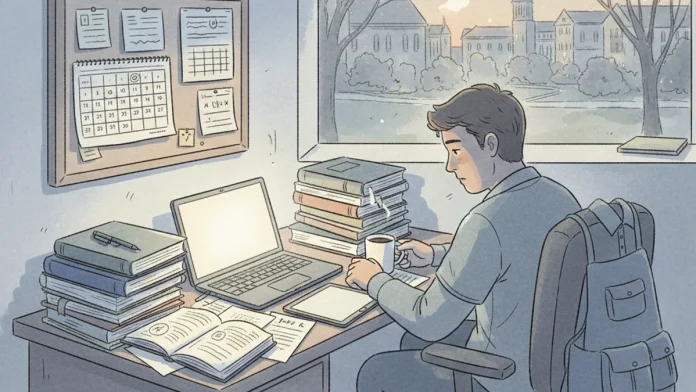
In Dutch university corridors, delays are becoming part of everyday conversation. Not dramatic dropouts or loud protests, just students quietly taking longer than planned. A recent survey by the Dutch National Student Association puts a number on it: more than a third of students are falling behind. And when asked why, the most common answer wasn’t poor grades or wrong choices. It was stress, depression, and the slow drain of emotional exhaustion.
For many students, the problem doesn’t arrive all at once. It starts with pressure that feels manageable. A heavy course load. A part-time job that stretches into evenings. Housing worries that never quite go away. Then motivation slips. Concentration fades. Deadlines seem to be closing in faster than before. When delays finally appear on a transcript, the pressure has usually been building quietly for months.
The Dutch system prides itself on efficiency. Degrees are structured tightly, with little room for detours. The Bindend Studie Advies, which can block students from continuing if they don’t earn enough credits in their first year, hangs quietly in the background. Some students say it keeps them focused. Others say it keeps them awake at night.
Money doesn’t help. The monthly student grant hasn’t kept pace with reality, especially in cities like Amsterdam, where rent alone can swallow almost everything. A lot of students are putting in long hours simply to make ends meet, with their studies pushed into whatever time is left between shifts. When stress builds, it’s rarely just academic. It’s financial, emotional, and logistical all at once.
Universities are aware of this. Counseling services exist. Wellbeing initiatives are growing. There is growing attention on helping students feel connected, supporting each other, and spotting difficulties before they escalate. Some universities are testing more tailored support, particularly for neurodiverse students or those experiencing burnout, while others are putting money into housing to ease one of the biggest everyday stresses.
At the national level, the government is funding a framework aimed at student welfare. It’s a signal that mental health is no longer seen as a private issue students should manage on their own. Still, the limits are clear. Support systems can help, but they don’t erase high rents, tight deadlines, or the quiet comparison culture fueled by social media.
There’s also disagreement about where responsibility lies. Student groups argue that rigid progress rules add unnecessary pressure. University leaders counter that early intervention prevents bigger problems later. Both sides point to student success, but from different angles. On the ground, students often feel caught in between, trying to stay on track while managing emotions they didn’t expect to define their university years.
Some signs are cautiously hopeful. Recent figures suggest student mental health may be improving slightly compared to the worst pandemic years. Small gains, fragile ones. But they hint that attention, even imperfect, can make a difference.
What’s harder to answer is what a “normal” pace of study should look like now. As universities push for efficiency and societies ask young people to be resilient, delays may be less a failure than a signal. A sign that higher education is brushing up against the limits of how much pressure students can quietly absorb before something gives.