

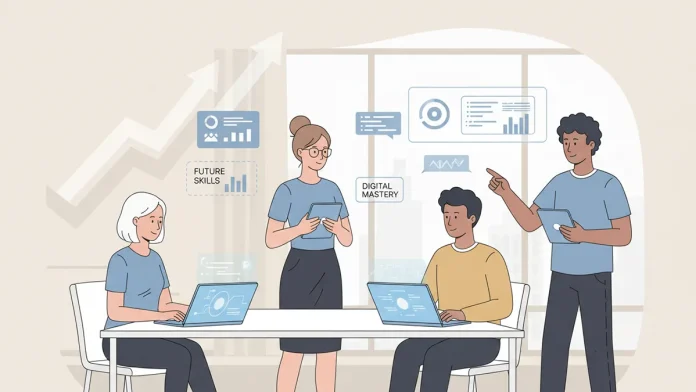
It usually starts with a small moment of confusion. A new customer opens a product, logs in for the first time, and pauses. The features look promising. The price made sense. But now there’s a question. What do I do first? How do I actually use this the way it was intended?
Across education and technology companies, that pause has become impossible to ignore. Over the past year, more organisations have begun treating customer education not as a support add-on, but as a core part of how growth happens. Not loudly. Not with big announcements. Just steadily, as teams notice what works and what quietly doesn’t.
On the ground, the shift feels practical rather than strategic. Support desks are overwhelmed. Sales teams are frustrated when products don’t stick. Customers churn not because the product failed, but because they never fully understood it. In response, companies are building learning spaces that sit somewhere between onboarding, community, and long-term relationship building.
You can see it in how some familiar platforms behave. Design tools, enterprise software, even niche SaaS products now guide users through real tasks instead of static instructions. Lessons appear at the moment they’re needed. Tutorials live inside the product, not buried in a help centre. Learning feels less like training and more like discovery.
For customers, the difference is subtle but real. Instead of feeling dependent on support tickets or trial-and-error, they feel capable. That confidence matters. People who understand a product tend to stay with it. They recommend it. They forgive small flaws. They invest time.
What’s striking is how often companies arrive at customer education almost by accident. Many start by trying to reduce repetitive support questions. Others want to shorten the gap between purchase and value. Some notice that their most loyal users are the ones who’ve taught themselves the most. Over time, these observations harden into a pattern: teaching customers well is cheaper than constantly rescuing them.
There’s also a cultural change happening inside organisations. Learning and development teams, once focused mainly on internal training, are increasingly pulled into customer-facing work. Their skills translate well. They know how adults learn. They know attention is limited. They know that long manuals don’t get read.
The result is content that looks different from traditional documentation. Short videos. Interactive walkthroughs. Practical examples that mirror what customers are trying to do at work, late on a Tuesday afternoon, with three tabs open and a deadline approaching. It’s less polished, sometimes imperfect, but far more usable.
Community plays a growing role too. Customers don’t just want answers from companies. They want to hear how other people use the same tools. Forums, user groups, and shared spaces have become informal classrooms. In some cases, the most trusted advice comes not from the brand itself, but from another user who has already made the mistakes.
This doesn’t mean customer education replaces marketing or support. It sits between them. Marketing makes promises. Support fixes problems. Education helps ensure fewer problems happen in the first place. When it works well, it’s almost invisible.
There are limits, of course. Not every customer wants to learn deeply. Some just want things to work. Others are short on time. Education programs fail when they become too heavy, too abstract, or too self-congratulatory. The best ones respect how busy people are. They offer help without demanding attention.
What’s driving the current interest is timing. Products are more complex than they used to be. Updates arrive constantly. Customers expect flexibility, not instruction manuals. At the same time, companies are under pressure to grow without endlessly expanding support teams. Teaching scales better than troubleshooting.
None of this feels revolutionary. It feels obvious, once noticed. But that’s often how lasting shifts begin. Quiet changes in how organisations relate to the people who use their products. Less selling after the sale. More guidance. More trust that informed customers are better customers.
As customer education continues to spread, the bigger question isn’t whether it works. It’s how far companies are willing to go in treating learning as part of the product itself, not an optional extra. The answer will shape not just retention charts, but how people feel the next time they pause, cursor hovering, wondering what to do next.