

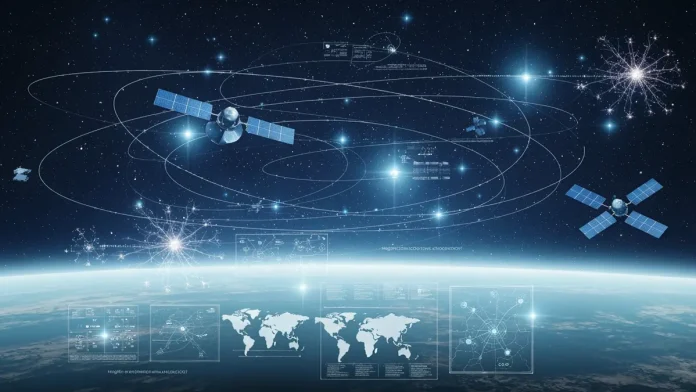
Over the past few decades, a profound transformation has reshaped how nations project influence and protect their interests. Spacepower has emerged as a critical domain where technology, economics, diplomacy and military strategy intersect. At the center of this transformation stand universities. Not defense ministries. Not aerospace giants. Universities are now the intellectual engines driving spacepower.
Higher education has moved far beyond its traditional role as a generator of scientific knowledge. Today, universities function as strategic national assets, shaping the people, ideas and conceptual frameworks that define how space is used in peace, crisis and conflict. From satellite navigation and Earth observation to cyber-secure ground stations and orbital maneuvering, nearly every modern space capability traces its origins back to academic research and education.
What often goes unnoticed is that universities do more than develop technology. They shape how spacepower is understood, interpreted and applied. Without this strategic literacy, even the most advanced space systems risk becoming underused or misapplied assets. Spacepower is not just about launching satellites. It is about knowing how those satellites influence diplomacy, deterrence, intelligence and escalation dynamics.
The United Kingdom provides a compelling example. British universities possess a distinctive intellectual lineage in spacepower thinking, combining strategic theory, geopolitics and applied research. This heritage enables them not only to build sophisticated space technologies but also to understand their broader strategic implications. That combination is becoming increasingly rare and increasingly valuable.
The global space environment has also changed dramatically. Space is no longer the exclusive domain of a handful of superpowers. Launch costs have fallen sharply. Microelectronics have become cheaper. Commercial actors now deploy massive satellite constellations. New countries are entering space with remarkable speed. This democratization creates enormous opportunity, but it also introduces significant risk.
States with space capabilities now gain diplomatic leverage, intelligence advantages and economic influence. Those without them become dependent on others. Spacepower is now embedded in foreign policy, national security strategies and alliance structures. At the same time, space introduces unprecedented strategic ambiguity. An orbital maneuver may be routine physics or deliberate signaling. A satellite inspection mission may be interpreted as preparation for interference. A cyber intrusion into a ground station could be espionage or the opening phase of a larger conflict.
This is precisely where universities become indispensable. For too long, policymakers have assumed that STEM education alone guarantees competitiveness. It does not. A nation can train world-class engineers, but without graduates educated in strategy, geopolitics and international relations, it remains strategically underprepared. Space systems are inherently dual-use. Civilian technologies can carry military implications. Understanding those implications requires strategic fluency, not just technical excellence.
Universities must therefore educate a new generation that combines technical mastery with strategic insight. Space engineers need to understand escalation theory. Astrophysics students must grasp geopolitics. Commercial satellite operators increasingly influence crises, yet many lack training in political signaling or conflict dynamics. This gap poses real risks.
Collaboration further complicates the picture. Space development depends on international partnerships across Europe, the United States, Asia and the commercial sector. Universities often serve as the first contact points through joint research, shared laboratories and academic exchanges. These relationships lay the groundwork for deeper industrial and governmental cooperation.
However, collaboration now unfolds in a competitive geopolitical environment. Some states exploit academic openness to accelerate military-civil fusion or acquire sensitive knowledge. The solution is not isolation but strategic collaboration. Universities need governance frameworks that balance openness with protection, supported by leadership that understands geopolitical risk.
Institutional geopolitical literacy is no longer optional. University leaders, research administrators and partnership offices must recognize that decisions in space-related fields can carry national security consequences. Clear governance around dual-use research strengthens both academic freedom and national resilience.
As spacepower becomes a defining force in global politics, the nations that succeed will be those that treat space as both a technological and strategic domain. Universities sit at the heart of this equation. They educate the scientists who build space systems, the strategists who interpret them and the policymakers who manage crises beyond Earth’s atmosphere.
Conclusion: Spacepower will shape the balance of power in the twenty-first century, and universities will determine who understands and controls it. Countries that empower their universities to integrate science, strategy and geopolitics will be best positioned to protect their interests in orbit and beyond. In the age of space competition, universities are not peripheral institutions. They are the intellectual engines of national spacepower.