

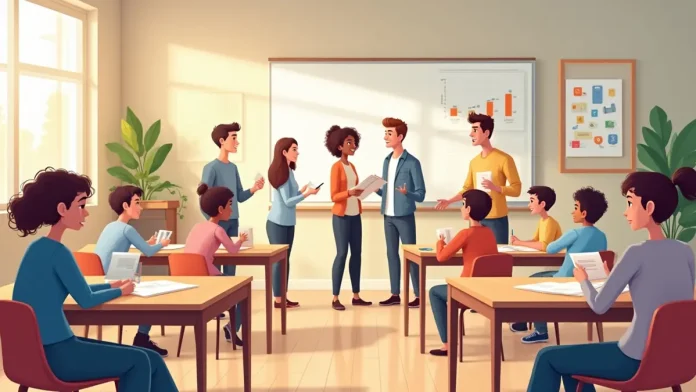
A growing body of research has long suggested that social-emotional learning (SEL) meaningfully improves student performance, but a new analysis from the Yale School of Medicine finally quantifies how much impact these programs truly have. Drawing from 40 studies and more than 33,700 students across grades 1–12, researchers found that SEL programs consistently lead to higher academic achievement—regardless of age, grade level, or the performance metrics used.
The findings expand upon Yale’s influential 2023 meta-analysis of over 400 studies on SEL effectiveness. According to Christina Cipriano, associate professor at Yale’s Child Study Center, the new analysis was driven by the community’s desire for more clarity on academic outcomes. In her words, the team wanted to understand “what does the data say specifically about academic achievement outcomes to be expected from social-emotional learning programs?”
The results are striking. Students participating in SEL programs demonstrated an average 4-percentage-point increase in academic achievement. For SEL programs implemented over a full academic year, performance jumped to 8 percentage points, revealing that program duration directly affects outcome strength. When broken down by subject, the effect becomes even more nuanced: literacy scores rose by 6.3 percentage points, while math scores increased by 3.8 percentage points.
Cipriano explains that these improvements are deeply rooted in human development. She notes that cognition and emotion are neurologically intertwined, meaning that a student anxious, frustrated, or overwhelmed cannot meaningfully engage with even the best curriculum. SEL programs explicitly teach students how to manage their emotions—skills like deep breathing, emotional regulation, and positive self-talk—which creates the mental readiness necessary for academic success. As Cipriano put it, “they are not able to access the awesomeness of that curriculum” if they are emotionally distressed.
However, these breakthroughs arrive during a politically challenging moment. SEL is increasingly criticized alongside movements against critical race theory and books featuring LGBTQ+ themes. The report notes that SEL implementation faces growing resistance despite robust evidence of its benefits.
Importantly, only 17 percent of SEL studies from 2008 to 2020 included academic achievement data. But in response to Yale’s 2023 call for more comprehensive research, scholars have strengthened their focus on academic outcomes. Cipriano’s team is preparing to release a new analysis—including data through 2023—which will offer a deeper understanding of SEL impacts during the COVID-19 pandemic, a time when natural SEL skill development was disrupted by social isolation and the loss of organic peer interaction.
Cipriano emphasizes that social distancing deprived students of everyday moments—hallway conversations, friendly disagreements, spontaneous collaboration—that naturally build SEL capacity. This absence created a greater need for structured, explicit SEL instruction to ensure every student received equitable opportunities for emotional and social growth.
Conclusion
The latest Yale findings deepen the evidence that SEL is not just an add-on—it is a fundamental driver of academic success. With measurable boosts in GPA, literacy, and math performance, SEL helps students become emotionally grounded, cognitively ready, and academically capable. As researchers prepare to release post-pandemic data, one thing is clear: investing in SEL is an investment in both student well-being and long-term educational performance.