

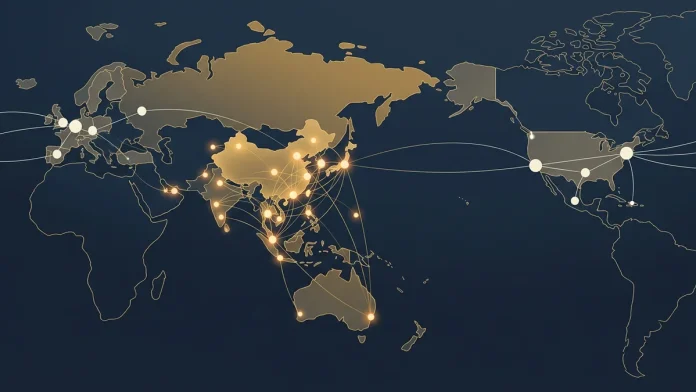
Rankings have a particular rhythm. The same names cluster at the top, the press release writes itself, and somewhere in the data something genuinely unexpected gets three sentences near the bottom. The Times Higher Education subject rankings for 2026 follow that rhythm closely. MIT leads arts and humanities, business, social sciences. Stanford takes education and law. The US tops eight of eleven tables, the UK the rest.
Read only that far and you’d file it away without much thought.
China had four top-ten subject placements a year ago. It has seven now. That’s not a footnote — it’s the actual story.
Peking University entered the computer science top ten for the first time. Tsinghua broke into physical sciences at the same level. In engineering, Peking moved to eighth. The National University of Singapore joined the arts and humanities top twenty, also for the first time. Life sciences now has three top-twenty Asian universities, which has never happened before.
These aren’t institutions that appeared in the rankings because someone decided to notice them. Peking, Tsinghua, NUS — they’ve been building research output and graduate programmes for fifteen years. What changed is the breadth. Hugo Horta at the University of Hong Kong has been tracking East Asian publication patterns in the humanities and social sciences for years. His observation is that volume came first, quality followed, and the two are now moving together. That combination is harder to wave away than raw numbers alone.
Where the growth is happening is also shifting. STEM was the obvious story for a decade — engineering, physical sciences, computing. The 2026 subject data suggests the momentum has spread. Arts, humanities, social sciences. Research cultures that were once concentrated in technical output are widening their scope. That’s a different kind of signal than another top-ten placement in materials science.
Oxford has held the overall number one position for ten consecutive years. That’s a real achievement and also, in a way, a symptom of how frozen the very top of these tables has become. Scroll down to the institutions ranked between twenty and a hundred and the picture looks considerably less settled. More Asian universities, more variety in where serious research is happening, more genuine choices for a student in Kuala Lumpur or Seoul weighing up postgraduate options. The top is stable. Everything beneath it is in motion.
The methodology hasn’t quite caught up with that. Eighteen indicators weighted toward publication volume and international reputation tend to favour institutions that have been playing a specific game for a long time. The game itself is shifting faster than the scorecard.
Futao Huang at Hiroshima University’s Research Institute for Higher Education has observed that growth in science across Asia has not stalled but has clearly slowed relative to the previous decade. The more interesting question is where the momentum has gone instead. The 2026 subject tables offer a partial answer. It didn’t slow down. It broadened.