Walk into any workplace in Europe right now and you will hear the same conversations. The skills that people need to do their jobs are changing. The roles that people have at work are not clear cut as they used to be. People are working for longer. They are not always doing the same type of work. In the middle of all this change Continuing Professional Development or CPD is no longer something that people just do to meet a requirement. Continuing Professional Development is something that people really need to do to survive in their jobs. Continuing Professional Development has become a tool for people to stay up, to date with the skills they need.
Across the European Union Continuing Professional Development is really connected to the idea of learning throughout your life. The idea is easy to understand. Jobs are changing a lot faster than what you studied in college. What is important is not just what you learned a time ago but how you keep learning new things while you are working. That is why things like Recognition of Prior Learning and micro-credentials are becoming more popular. They understand that learning does not just happen in a classroom. Continuing Professional Development happens on the factory floor in hospitals in meetings, about projects and during the years you spend solving problems and getting experience.
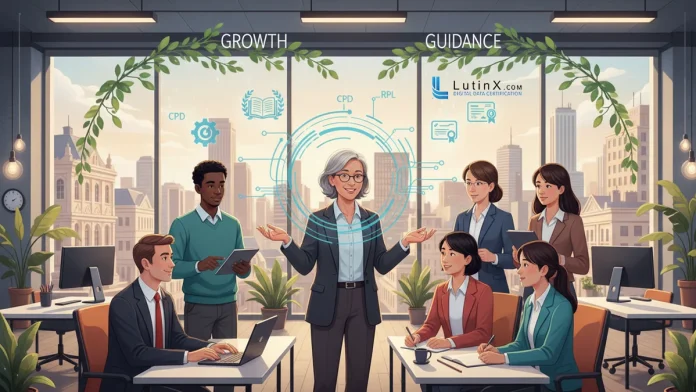
For a lot of people who have been working for a time RPL is a big change. RPL lets people use the things they have learned to get qualifications that everyone recognises. However this is not a thing to do. It can be really hard to write down what you know. Explain why it is important and make sure it fits with the official rules. This can feel strange or even scary. That is where a mentor comes in they do not always get noticed,. They make a big difference. A mentor helps people take the things they have learned from their life and turn them into something that can be officially recognised without losing what makes it special. RPL is a way for people to get credit for what they have learned. A mentor can help make RPL work, for them.
Micro-credentials are another part of the puzzle. These are courses that focus on the skills people are missing. They are great for people who do not have time to get a degree.. On their own micro-credentials can feel like they are all over the place. This is where mentoring comes in. It helps to connect the micro-credentials. You have a conversation, about what you learned you think about it and suddenly a few small courses start to make sense. They start to form a plan instead of just being a bunch of certificates that you collected. Micro-credentials start to mean something when you have someone to guide you through them.
Later in a career the role of Continuing Professional Development changes. The focus shifts away from skills and, towards leadership, judgement and passing knowledge on to others. Many experienced professionals say that mentoring at this stage of their career helps them stay engaged and feel confident. This is especially true when they are navigating change or thinking about what comes in their career. For organisations Continuing Professional Development is also a way to keep knowledge from quietly walking out the door when experienced professionals leave.
In Ireland people are starting to notice this way of doing things.
Universities and national programmes like Springboard+ Skillnet Ireland and SOLAS are making mentoring a part of the way people learn and get certified like when they do Continuing Professional Development or get recognition for what they know or take short courses to learn new things.
The focus of mentoring in Ireland is not so much about telling people what to do. More, about helping them make good choices when it comes to mentoring and education and guiding them through the process of mentoring in Ireland.
What is really interesting is how much this feels like it is about people. Continuing Professional Development works best when it is not treated as filling out forms or something that people have to do but as an ongoing talk about Continuing Professional Development. Having someone to guide you does not make learning happen quicker or make it simpler. It helps you understand what Continuing Professional Development is all, about.. In a job market that is still trying to figure out what it needs being able to understand things might be the most useful skill of all when it comes to Continuing Professional Development.
Instruments referenced: Continuing Professional Development (CPD), Recognition of Prior Learning (RPL), EU micro-credentials, mentoring, Springboard+, Skillnet Ireland, SOLAS-funded programmes