

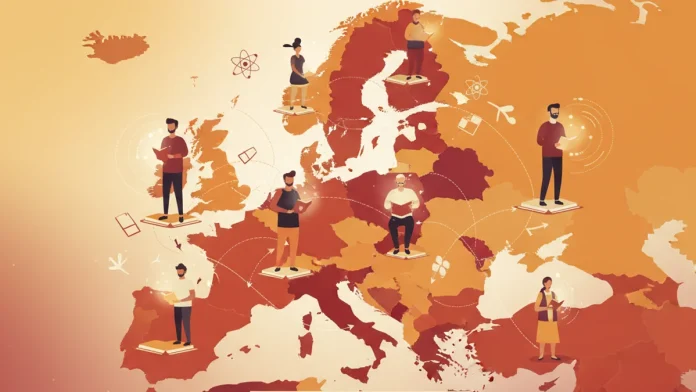
The new journal from EPALE is looking at how Erasmus+ makes a difference. Erasmus+ is the focus of this journal, from EPALE. They want to know what kind of impact Erasmus+ has.
Across Europe the way adults learn is changing. We are seeing a lot of things like mobility projects and partnerships. Some of these projects are short like when people visit each other for a while. Others are long, like when people work for a long time. For teachers and organizations Erasmus+ is no longer just a nice thing to have it is a big part of how people actually learn. Now EPALE Italy wants to take a step and think about what is really happening with all of these new things. They want to look at Erasmus+ and see what it is doing for adult education.
The EPALE Journal on Lifelong Learning and Continuing Education is looking for people to write papers for its issue, which is issue 19. This time the journal is focused on Erasmus+. How it affects adult education. The people in charge want to hear from researchers and practitioners and networks and organisations over Europe. They want people to share their thoughts and ideas. The goal of the EPALE Journal on Lifelong Learning and Continuing Education is not to say how great everything is but to really think about what’s working. What changes are actually making a difference? What ideas can be used in countries? The EPALE Journal on Lifelong Learning and Continuing Education wants to know what looks good in theory. What is it like, in real life when you are actually doing it?
Submission tracks
The journal is easy to follow. It has two parts. One part is for the RIA-AE network. This network has been looking at how adult education can be improved since 2023. It is made up of around twenty agencies that work together. The other part is open to people outside of the RIA-AE network. It wants to hear from people who have views, on adult education even if they are not part of the RIA-AE network.
Types of contributions
Authors have two options to choose from. The first option is to write about research that is based on facts and numbers and that also looks at the picture. This kind of research is very important. The second option is to share what people have learned from doing things like studying a specific situation or talking about what has worked in the past. The people in charge think both options are equally good. This is because adult education is something that happens in the world and it is also something that people think and talk about. Adult education is about finding a balance, between what we know from theory and what we learn from practice and that is why authors can write about research or share their experiences like case studies and documented practices.
Key requirements
When you send in something to be considered it has to be written in English and you have to reference things properly using the APA style. Your article should start with a part then have two or three main parts, then a conclusion, some notes and a list of all the books and things you used for research. The journal has a way of reviewing what people send in where the people reviewing it do not know who wrote it and this helps keep the journal at a high academic level but it is still easy for people who are not just academics to understand and use the information, in the journal.
Timeline
The deadline, for turning in what you have done is 28 March 2026.
After that people will look at what you have done and pick the ones by 30 April.
Then your work will be published on 30 June.
At a time when Erasmus+ is everywhere in adult education conversations, this issue offers a pause. Not to ask whether programmes exist, but what they leave behind.