

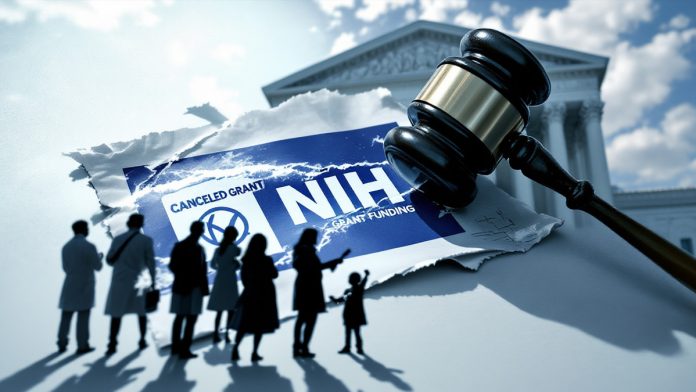
A growing coalition of higher education organizations is urging the U.S. Supreme Court to allow a lower court’s ruling to stand — one that ordered the National Institutes of Health (NIH) to restore funding for hundreds of canceled grants. At the heart of the issue is a controversial decision by the Trump administration to revoke funding for scientific research projects deemed related to diversity, equity, and inclusion (DEI).
In June, U.S. District Judge William Young ruled in favor of researchers and advocacy groups, declaring the NIH’s blanket terminations as legally unfounded. This came in response to executive orders from President Trump during his second term, which directed all federal agencies to terminate equity-related grants and projects associated with “gender ideology.” The NIH responded by abruptly canceling over a thousand research grants, leaving scientists and universities scrambling to manage halted studies and layoffs.
Higher Ed Community Pushes Back
Eight major organizations — including the American Council on Education (ACE), Association of American Universities (AAU), and the Association of American Medical Colleges (AAMC) — have filed legal briefs arguing that reinstating these grants is essential for national scientific progress. Their position is clear: halting research midstream wastes federal investment, destabilizes careers, and jeopardizes studies into diseases like Alzheimer’s and diabetes.
The plaintiffs argue that these grants went through rigorous scientific vetting before being approved and that the terminations are based purely on ideological grounds, not scientific merit. In fact, some researchers were told their work no longer “effectuates agency priorities,” without specific justification.
Supreme Court Appeal and Political Implications
After losing appeals in both district and appellate courts, the Trump administration elevated the matter to the Supreme Court, requesting an emergency pause on the lower court’s ruling. It argues that Judge Young lacked jurisdiction and that the case should be decided in the Court of Federal Claims. The administration also cited a recent Supreme Court decision allowing the Department of Education to keep $65 million in canceled grants frozen, claiming a similar outcome should apply.
However, higher ed groups warn that if the terminations remain in place during the appeals process, the U.S. risks losing not only critical research but also scientific talent and institutional trust in federal funding mechanisms.
Conclusion:
This case is more than a legal tug-of-war over grant procedures; it symbolizes the ongoing clash between scientific independence and political ideology. As the Supreme Court weighs in, the decision will carry significant consequences for how research is funded, prioritized, and protected in the United States. For now, the academic community continues to rally for a return to evidence-based funding policies — where scientific merit, not politics, determines the future of American biomedical research.