

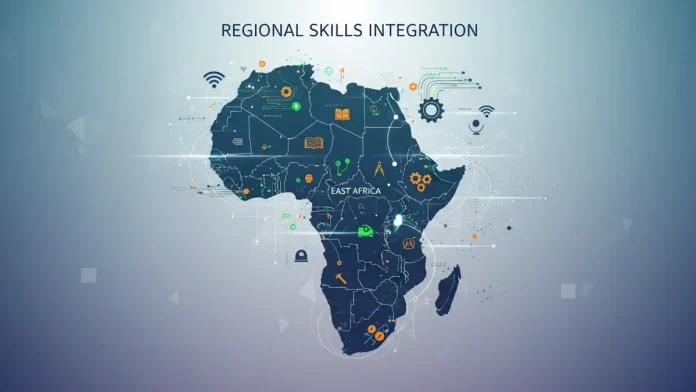
A quiet transformation is reshaping technical and vocational education and training in East Africa, and it is happening through cooperation rather than competition. The East African Skills for Transformation and Regional Integration Project, widely known as EASTRIP, is proving that regional collaboration can deliver tangible results in skills development, workforce mobility, and economic integration.
Since its launch, the project has supported an estimated 2,000 students, dramatically increasing regional TVET enrolment from just 31 students across five institutions to 2,057 learners by June 2025. This growth reflects rising confidence in a system designed to align training with real labour market demand while allowing students and trainers to move freely across borders.
EASTRIP is a five year initiative valued at US$293 million, funded by the World Bank together with the governments of Ethiopia, Kenya, and Tanzania. Its core objective is to address skills shortages by strengthening 16 selected Regional Flagship Training Institutes, or RFTIs, through investment in infrastructure, curriculum harmonisation, staff development, and industry partnerships.
One of the project’s defining strengths is its emphasis on specialisation. Each RFTI focuses on a distinct industry area such as renewable and geothermal energy, textiles and garments, leather processing, agro processing, automotive technology, construction, aviation, ICT, marine transport, and port logistics. This approach ensures that no single country bears the cost of developing every skill set, while the region as a whole gains access to a diverse pool of highly trained technicians.
For students, this structure opens doors to cross border learning opportunities that were previously unavailable. A learner from one country can now access advanced training in another, building both technical competence and regional awareness. According to project leaders, every student who crosses a border through EASTRIP becomes an informal ambassador for regional cooperation and integration.
The project has also prioritised trainer mobility and upskilling. By June 2025, 184 teaching staff had participated in cross border exchanges, while 77 trainers upgraded their qualifications through EASTRIP China funded master’s and PhD programmes. This marks a significant milestone for teaching staff in non degree granting institutions. At the same time, industrial attachments among trainers rose from just 11 to 737, strengthening the link between classroom instruction and workplace reality.
Digital delivery has played a critical role. EASTRIP supported the development of online learning management systems, enabling tutors in one country to teach students across the region. This ICT enabled model has helped overcome shortages of specialised instructors and expanded access to niche skills, particularly in highly technical fields.
Industry engagement remains central to the project’s success. Through close collaboration with employers, RFTIs have developed demand driven programmes and micro credentials tailored to evolving labour market needs. Two way exchange arrangements between industry professionals and training institutions have narrowed the gap between theory and practice, improving graduate readiness.
The impact is measurable. Student enrolment across participating institutions rose from 6,971 to 57,857, while female participation exceeded expectations, reaching 18,737 students. Graduate employment within six months of completion climbed to 79%, up from a baseline of 47%. In addition, 500 demand driven programmes were created, and 271 qualifications are now mutually or regionally recognised, easing workforce mobility across East Africa.
CONCLUSION
By aligning skills training with regional priorities and labour market needs, EASTRIP demonstrates that integration delivers results. Its success offers a compelling blueprint for how shared investment in TVET can power inclusive growth and regional transformation.