

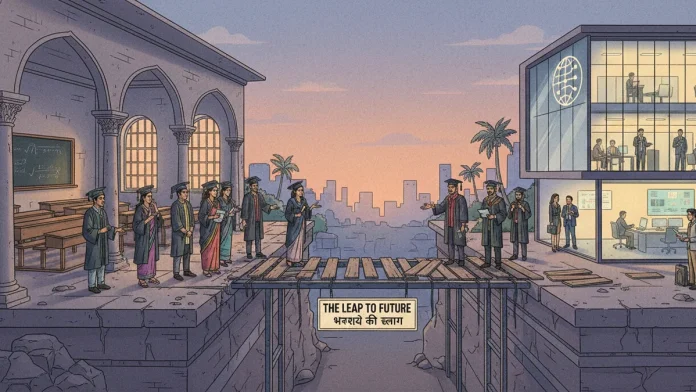
If you walk around a university in India you will notice that the atmosphere is lively. The classrooms are packed with students. You will see banners announcing courses. Many parents think that having a degree from a university is still the way for their children to get a good job. However when you step outside the campus things look different. The job market is telling a story. A report by TeamLease EdTech says that three out of four colleges and universities are not giving students the skills that employers are looking for. This is not a problem on paper. University graduates are feeling the effects of this problem a few months after they finish their studies. The university education is not preparing students, for the job market. University graduates are struggling to find jobs that match what they learned in university.
The numbers are really hard to ignore. About one in six institutions say that most of their students get jobs within six months. For all the students the degree they worked for often feels like a waiting room instead of a launchpad to start their career. This is not about how bad students want something or how hard they try. It is about finding the fit. What students learn in school and what workplaces expect from students are becoming different things and this is happening slowly in some cases and in other cases it is very painful, for the students. The students and the degree they earn are not matching up with what the workplaces expect from the students and the degree they have.
The problem is really with what studentsre learning. A lot of schools are still teaching things that sound good but are not really useful. Offices and factories are changing fast because of technology and schools are not keeping up. Sometimes people from companies come in to talk to students. This is not a big part of what students learn. Most of the time students do not really get to learn about the things that companies are doing. So when students graduate they know a lot of things. They do not know how to use them in a real job. This is something that people who hire employees see all the time. The curriculum is the issue here. The curriculum is not preparing students, for the world.
People in the industry say that the intention is good. The industry is not doing a good job of making it happen. The industry has professors of practice who are supposed to teach students about the world but there are not many of them. The certifications that employers like to see are not always required. Sometimes they are not even offered. The training that the industry provides only reaches a number of students. For students who graduate the first time they really learn about the tools and expectations of a workplace is when they are interviewing for a job. The workplace is a place to start learning about these things especially during a job interview. Many students are learning about workplace tools and expectations for the time and that is the case, for many graduates.
People feel uneasy about the idea that universitiesre only there to help students get jobs. Some teachers are worried that universities will start to feel like offices. Universities are also where people go to learn things come up with new ideas and think about the future. This problem has been around for a while. It seems like a bigger deal now. Families are thinking about how money they will get back from paying for university. Students are worried about paying back their loans. Universities are for research. Thinking about the long term not just, for getting a job.
Practical training is really important. Internships do not always. When they do they are usually not a big part of the program. Working on projects with companies is not something that students get to do very often. This means that students graduate with a degree but they do not have a lot of experience to talk about when they meet with recruiters. People are starting to pay attention to skills like communication and teamwork which is a good thing.. The problem is that it is up, to each department to make these changes, not the whole system. Practical training is still something that needs a lot of work.
There are also a lot of missed connections. The alumni networks, which could be really helpful for things like mentoring and internships and even getting a job are not used much as they could be. Many graduates leave campus. Never really connect with their old school again which is a shame because they take all their experience with them. Alumni networks are a resource but they are not being used to their full potential, which means graduates are missing out on things like mentoring and internships, from these alumni networks.
What is happening is that we see that everyone is responsible for this. Universities cannot do everything to make sure students are ready, for a job. Companies cannot just sit back and say it is not their problem. Companies want students who’re ready to work but many companies do not want to spend time provide mentors or give resources to help students while they are learning. At the time what students learn in school is often based on the jobs that existed in the past not the jobs that will exist in the future. The employability gap is a problem and universities and companies must work together to solve the employability gap.
The workforce in India is changing. Making things like manufacturing is important. It is the service jobs that are creating most of the new jobs. The skills that people need are changing at speeds. Nobody really knows what kind of jobs people will be doing five years from now. This makes it a bad idea to have plans that cannot be changed. One thing that seems certain is that colleges and universities are being asked to make sure what they teach is relevant, to the jobs that’re available without losing the freedom to make their own decisions about what they teach.
The big problem is not really about choosing between getting knowledge and getting jobs. It is about learning how to connect knowledge and jobs in a way that works. Knowledge and jobs should not be forced into a space.
Students are, in a spot right now. They have degrees that promise a lot. The system does not always give them what it promises. What happens next is going to depend on whether universities and employers work to find a solution. Universities and employers need to build bridges. If not universities and employers will just keep talking. Not really listening to each other.