

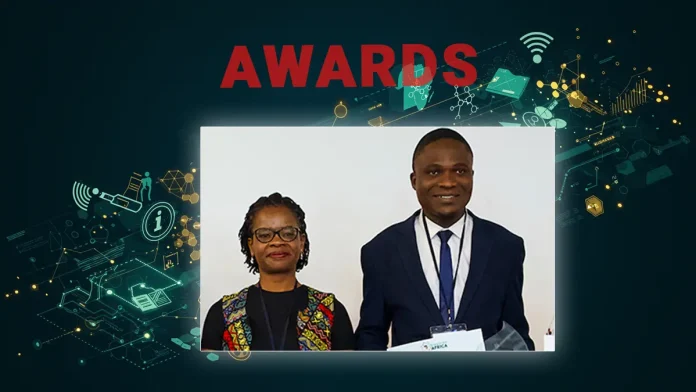
University World News has reached a significant milestone as two of its contributing journalists received major honours at the Africa Science Journalism Awards, reinforcing the publication’s growing influence in global science and higher education reporting. The awards were presented during the World Conference of Science Journalists held in Tshwane, South Africa, from 1 to 5 December, marking the first time in the event’s 33 year history that it was hosted on African soil.
The recognition highlights not only individual excellence but also the critical role of science journalism in shaping public understanding, policy debate, and social justice across Africa and beyond. At a time when climate change, public health, and research equity dominate global discussions, the achievements of these journalists underline the power of evidence based reporting rooted in local realities.
Scovian Lillian, a Nairobi based freelance journalist who has contributed to University World News for five years, won the Best News Story and Feature Category. Her award winning article, Climate change is fuelling leishmaniasis in northern Kenya, explored how environmental shifts are accelerating the spread of neglected tropical diseases. The story connected climate data, public health research, and lived community experiences, demonstrating how scientific reporting can translate complex issues into compelling narratives with real world impact.
Lillian described the recognition as more than a personal achievement. She emphasised that every story told against the odds matters, particularly when journalists work in challenging environments with limited resources. Her work reflects a broader trend in African science journalism that prioritises accountability, resilience, and the amplification of underreported voices.
Another University World News contributor, Hammad Abdulrasheed, received recognition in the Early Career Journalist Category for his investigation into contaminated sachet water production in Sokoto, Nigeria. Published by The Cable, the investigation exposed serious public health risks linked to poor regulation and unsafe manufacturing practices. Abdulrasheed, who also recently qualified as a member of the Nigerian Bar, frequently covers legal and policy issues affecting higher education and research systems.
In 2025 alone, Abdulrasheed has been shortlisted for the Thomson Foundation Young Journalist Award and won the investigative category at the Diamond Awards for Media Excellence. These achievements underscore how science journalism increasingly overlaps with legal analysis, public policy, and governance, especially in regions where regulatory gaps can directly impact human health and safety.
Both awards were organised and funded by the Science for Africa Foundation, which continues to play a central role in strengthening science communication across the continent. The foundation’s support reflects a growing recognition that journalism is an essential component of Africa’s research ecosystem, not a peripheral activity.
Beyond individual accolades, University World News contributors were highly visible throughout the conference, participating as panellists, moderators, and delegates. The conference theme, Science journalism and social justice, framed discussions around climate vulnerability, antimicrobial resistance, environmental threats, quantum science, and emerging challenges such as artificial intelligence in newsrooms and the fight against disinformation.
Desmond Thompson, a Stellenbosch based contributor, led a session examining who gets to tell science stories and whose knowledge is prioritised. The discussion addressed how African researchers are often treated as junior partners in global collaborations, a dynamic that science journalists must question and contextualise. These conversations highlighted how power, funding, and geopolitics shape global research agendas, often with serious consequences for African institutions.
Panels also explored ethical challenges, including conflicts of interest in science reporting. Journalists Maina Waruru from Kenya and Esther Nakkazi from Uganda discussed how limited funding and institutional support can pressure reporters to rely on sponsors or political actors. They stressed that transparency and ethical clarity are essential to maintaining public trust, even when resources are scarce.
The presence of multiple University World News contributors at the conference demonstrated the publication’s commitment to building global networks while amplifying African perspectives. Despite progress, participants acknowledged that African journalists remain underrepresented at international forums, reinforcing the need for more inclusive opportunities and sustained mentorship.
Conclusion:
The recognition of University World News journalists at the Africa Science Journalism Awards reflects a broader shift in how science reporting is valued across the continent. Their work shows that rigorous, ethical, and locally grounded journalism can influence public understanding and policy at the highest levels. As science becomes increasingly central to social justice, health, and climate resilience, the role of trusted journalists and platforms like University World News will only grow in importance.