

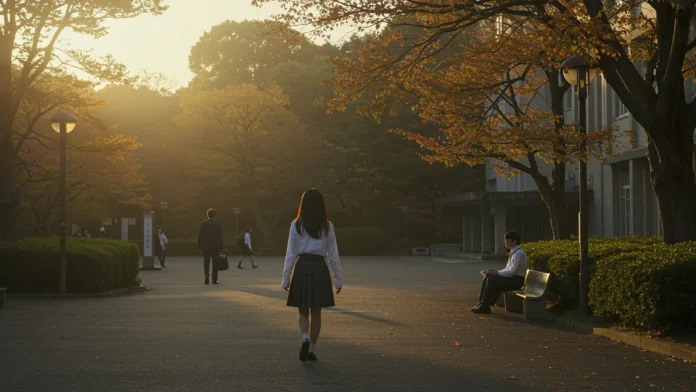
On many Japanese university campuses, the buildings look impressive from the outside. Clean lines, quiet courtyards, orderly paths. But spend a full day there as a student and the calm can start to feel isolating. When classes end, there’s often nowhere obvious to go. Libraries close early or enforce silence. Cafeterias shut between meals. Gyms belong to sports clubs, not casual users. Students drift home or scatter into the city, and campus life thins out fast.
This matters more now than it used to. Japan wants to attract 400,000 international students by 2033, even as the domestic student population shrinks. Recruitment campaigns talk about global outlooks and academic quality. Yet many students say something simpler is missing: places to just be.
Interviews with students who have studied both in Japan and the United States point to the same gap. They talk about wanting informal spaces where studying blends into conversation, where friendships form without being scheduled. In the US, they remember libraries that stay open late, corners where you can bring coffee, group tables that invite quiet talk. In Japan, libraries feel more like storage rooms for books than places for people.
Cafeterias show a similar pattern. The food is affordable and often good, but the clock rules everything. Once lunch service ends, lights dim and doors close. No hanging around. In contrast, many American dining halls double as living rooms. Students stay to read, meet friends, or work between classes. The space does more than feed them. It holds them.
Gyms may be the sharpest contrast. On Japanese campuses, they’re often locked behind club membership. If you’re not an athlete, you’re out. Students describe wanting a place to run off stress after exams or just move a bit during long study weeks. Instead, they head off campus or give up.
These missing spaces quietly shape who feels they belong. Without casual gathering spots, international and local students mostly meet in formal settings: class, orientation events, language exchanges. Those help, but they don’t replace everyday contact. The small conversations that happen over coffee or between workouts never get the chance to start.
What’s striking is how little this would cost to fix. No shiny new buildings required. Longer library hours. Cafeterias that stay open. Gyms opened to everyone. Small shifts, but they change how a campus feels after 5 p.m.
As Japan competes for students in a crowded global market, the question may not be how many people arrive, but how many want to stay. Campuses that empty out at dusk send a quiet message. And students, especially those far from home, tend to hear it.