

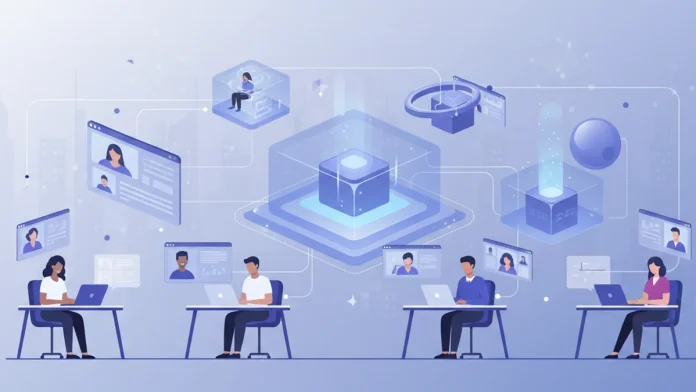
Inside companies that are growing really fast product knowledge is a big worry that nobody talks about. The sales teams want to be able to answer questions correctly. The support agents need to understand the product so they can help customers. The marketing team has to change the way they talk about the product every months.. The product itself is always changing.
The old way of training employees, where they would all sit in a conference room and look at slides does not work well anymore. Teams are spread out across time zones. New employees are starting every month.. New features are being added to the product faster than anyone can update the manual. More companies are moving their product training online so employees can learn what they need to know at their own pace.
This sounds like an idea.. The truth is, it is also necessary for the companies to survive.
Here is what this shift to training looks like in real life:
1 Short videos that show how the product works, instead of long demonstrations.
Teams are breaking down the product into videos that are only a few minutes long. For example a quick video that shows how to use a feature.. A short animation that explains how something works. Sales representatives can watch these videos between calls. Support agents can watch them before they answer a question from a customer. This way of learning is more casual and more practical.
2 Interactive pictures of the product that you can click on.
For products that’re physical or technical static diagrams are not enough. Companies are creating 3D models or pictures with labels that you can rotate zoom in on and click on parts. This makes it feel like you are actually handling the product. For teams that are spread out over the world and may never see the product in person this is really important.
3 Exercises that help employees understand how the products features can help customers.
One problem that companies have is that employees can list the products features. They do not understand why they are important. Some training programs are trying to fix this by making employees match the features with the benefits they provide to customers. For example you might click on a feature. Then match it with a problem that it solves for the customer. This is an exercise but it helps employees have real conversations with customers. The goal is not to memorize a list of features but to really understand how the product can help people.
4 Guides that help employees understand the products message.
The way companies talk about their products is always changing. Of sending employees a PDF document some companies are creating interactive guides that have many layers. You can start with the message and then click to learn more about the reasons why the product is important. This is like a script that employees can use when they talk to customers. It is not a document but a living guide that changes as the product changes.
5 Quick updates when the product changes.
When a new feature is added to the product employees do not want to have to go through a training program again. They just want to know what the new feature does and how to use it. Companies are creating modules that explain the new feature or a one-page summary that employees can save. This is like a news alert, not a training event.
6 Simulations that show employees how to use the product.
For products that’re complicated to set up or use interactive simulations can help employees learn what to do. This is not the exciting thing to do but it helps reduce mistakes. Especially for service teams that need to be confident when they are helping customers.
Tests that feel like life.
Some companies are moving away from quizzes and instead creating short scenarios that simulate real-life conversations with customers. For example a customer might object to something or a potential customer might compare the product to a competitors product. The employee has to respond to the customers concerns. This is a way for employees to practice what they have learned.
None of these things are new or revolutionary on their own.. What is changing is the way companies think about product knowledge. It is no longer something that you learn once and then forget. It is something that you need to keep learning and updating all the time. It is always available like the air you breathe.
There is a quiet question that nobody is really asking. When training is always available and digital does it really help employees understand the product or does it just become another thing to skim through when you have a moment?
Companies are betting that this new way of training will be flexible and helpful, for employees.. Employees seem to appreciate it.. As products get more complicated and peoples attention spans get shorter the challenge may not be just to give employees more knowledge but to make sure that knowledge really sticks.