

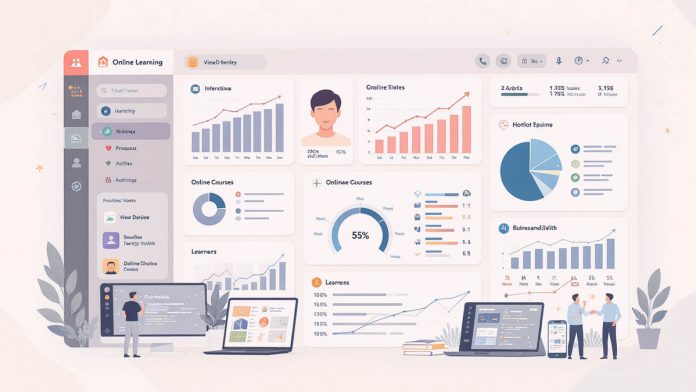
In today’s digital-first workplace, the demand for flexible, scalable, and engaging learning solutions is higher than ever. Traditional training programs—once centered on in-person classes and printed manuals—are rapidly being replaced by Learning Management Systems (LMS), powerful platforms designed to centralize, track, and optimize learning experiences for employees, customers, and students alike.
So, what exactly is an LMS, and why has it become a must-have tool for businesses and educational institutions? Let’s dive into the details.
What is an LMS?
An LMS (Learning Management System) is a software application that enables organizations to create, deliver, and monitor training programs and educational courses in one unified platform. It eliminates the inefficiencies of manual training by streamlining processes like course creation, learner tracking, and certification management. From employee onboarding to compliance training, an LMS ensures knowledge is delivered consistently and effectively.
One of the biggest advantages of an LMS is its centralized learning hub. Instead of juggling multiple tools or offline methods, organizations can store all their training content, learner data, and progress reports in a single digital ecosystem.
Key Uses of an LMS
An LMS is not just a repository of information—it’s a strategic tool for driving measurable outcomes. Here’s how organizations typically use it:
- Internal Training: Businesses leverage LMS platforms to onboard new hires, upskill existing staff, and ensure compliance with industry regulations. This ensures employees have the right knowledge to perform effectively.
- Customer and Partner Education: Companies use LMS tools to train clients on product use or provide partners with branded training materials, ensuring alignment and boosting customer satisfaction.
Types of LMS Platforms
Not all LMS platforms are created equal. Depending on your needs, you may choose between:
- Corporate LMS: Tailored for employee development, compliance, and productivity, with features like HR integrations and real-time analytics.
- Academic LMS: Designed for schools and universities, focusing on coursework management, assessments, and collaborative learning.
- Cloud-Based LMS: Provider-hosted and maintained, offering scalability and accessibility with minimal IT involvement.
- Hosted LMS: Installed on local servers, giving organizations full control over data and customization, but requiring more maintenance.
How an LMS Works
An LMS generally revolves around three key user roles:
- Admins: Manage system settings, users, and permissions.
- Instructors: Develop and deliver content while monitoring learner progress.
- Learners: Access training, complete courses, and earn certifications.
This structure keeps operations smooth and ensures each user engages with the system in a way that meets their goals.
Benefits of Using an LMS
Organizations adopting LMS platforms see substantial gains, including:
- Centralized Learning Management: All resources in one place for easy updates and consistency.
- Progress Tracking & Certifications: Automated reports and badges keep learners motivated while meeting compliance needs.
- Cost Efficiency: Reduced reliance on physical classrooms, printed materials, and travel expenses.
- Scalability: Once courses are created, they can be rolled out to thousands of learners with little extra cost.
Common Challenges
Despite the benefits, implementing an LMS can present obstacles. User adoption is one of the biggest—employees and learners need proper onboarding and intuitive interfaces to engage. Content management is another hurdle, as training materials must be kept up to date to stay relevant. Choosing an LMS with robust editing and content control tools can help mitigate this.
Top LMS Platforms to Consider
- Articulate Reach – Cloud-based, excellent for interactive and mobile learning.
- Moodle – Open-source and highly customizable, ideal for schools and higher education.
- Canvas – User-friendly with smooth integration and interactive learning features.
- TalentLMS – Scalable and global, perfect for businesses needing compliance and workforce training.
Future of LMS Technology
Two big trends are shaping the evolution of LMS platforms:
- AI-Powered Learning: Artificial intelligence personalizes learning paths, predicts skill gaps, and automates recommendations.
- Mobile & Microlearning: Learners want bite-sized lessons accessible anytime, anywhere—making mobile-first LMS design crucial.
Alternatives to LMS Platforms
While LMS systems dominate, alternatives exist:
- LXPs (Learning Experience Platforms): Personalized, AI-driven learning journeys.
- CMS (Content Management Systems): Basic distribution without progress tracking.
- Virtual Classrooms: Tools like Zoom or Teams for live instructor-led sessions.
Conclusion
A Learning Management System is no longer just a “nice-to-have” tool—it’s an essential framework for organizations navigating modern learning challenges. Whether training employees, educating customers, or scaling compliance efforts, LMS platforms provide the structure, flexibility, and innovation needed to keep pace with today’s fast-moving environment. For businesses and educators alike, adopting an LMS isn’t just about efficiency—it’s about staying competitive in a knowledge-driven world.