

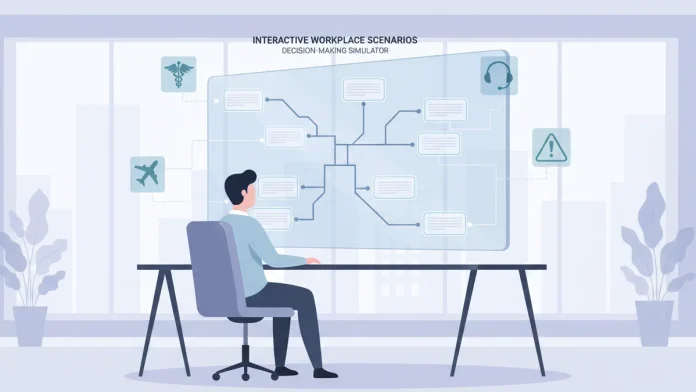
Getting ready for the moment before it actually happens is really important. The moment before it happens is what we need to prepare for. We have to think about what we will do in the moment before it happens. This is because the moment before it happens can be very critical.
The moment before it happens is something that we should always be ready for. We should be preparing for the moment before it happens all the time. This way, when the moment before it happens we will be ready to do what we need to do. Training, for the moment before it happens is key.
Most mistakes that happen at work do not come from people trying to do something. They usually come from surprise. People make mistakes at work because something unexpected happens and they are caught off guard. Workplace mistakes often come from surprise.
A new employee starts a shift. It is totally different from what they learned. They did not expect this. A customer service person picks up the phone. The call quickly gets out of hand. A junior manager is sitting in an airport lounge. Uses a laptop. This junior manager sees a security update. Clicks, on “remind me later” because they think it is not a big deal. Most of the time customer service and security updates seem like no problem. Until something goes wrong and it is a big problem.
That is where scenario based learning has become really popular and is now used a lot in companies. It used to be something that was not used much but now it is used all the time. Of having to sit through slides or watch long video lectures employees are put into situations that feel very real. For example they might have to do a safety check quickly.. They might have to deal with someone who is calling and is very frustrated.. They might have to update some software right before they leave for a business trip. The employees have to decide what to do in these situations. The system then responds to what they have chosen to do. Scenario based learning is used to teach employees how to handle these kinds of situations. Scenario based learning is becoming the way that companies train their employees.
This seems easy.. When you are actually doing it it changes the way you do your training. The training is different because of this.
I was at a meeting where people were learning about following the rules. The sales team was not just reading about how to protect peoples information. They were going through a pretend story about a day of traveling. One click on the computer. They were waiting in a long line at airport security. Another. They had lost their bag and someone had gotten into their account. Everyone was paying attention. They were talking about what they would do in that situation. Someone said “I would totally do that”. That moment when they realized what was happening was the part. The data privacy rules were becoming real to them because they were experiencing it in a story, about a travel day.
Companies have found out that people remember recognition for a time than they remember what they were told to do. Some information from the people in charge of teaching inside these companies shows that people are more likely to remember things when they actually make decisions of just listening to information. This makes sense because when you make a decision even if it is a practice decision it feels different than just reading something in a book. Recognition is something that companies use. It works better, than just giving instructions.
Customer service teams are doing things in a way. New agents do not have to follow a rep around for weeks. Instead they take calls where a customer tells them a long and frustrating story about getting the wrong item and not being able to return it to the store. The new agent has to figure out how to respond to the customer. If they do not handle the call well and just pass it to someone the situation gets worse.. If they listen to the customer and show they care about the problem the customer calms down. The customer service teams learn a lesson from this. The lesson is not about following rules. It is about understanding how people feel. Customer service teams learn that when they deal with customers they have to be careful and think about the customers feelings. Customer service is about more than solving problems. It is about being kind and helpful, to the customer.
Healthcare is really taking this to the level. Medical students are practicing Healthcare procedures in simulations that feel really real before they even get to work with a patient. For example pilots are practicing what to do when things go wrong in the air using cockpits.. People who operate heavy equipment are testing how fast they can react in digital versions of construction sites. Nobody thinks this is the same as real life.. Healthcare simulations are good enough to show us when someone is hesitant. This is especially important, in Healthcare where hesitation can be a problem.
What feels different now is how common branching scenarios have become. Even small organizations are building branching scenarios with off-the-shelf tools. A short micro-course can present a 30-second video then force the person to make a choice. The video does not need to be, like a movie. The video just needs to feel like it could really happen. Branching scenarios have become very normal. People are using them a lot.
There is something about this change that feels very familiar. The way people work is not as regular as it used to be. People do not have a routine like they used to. There are a lot of things that can happen. Training for work is changing too. It does not just tell people what they should do. Training for work asks people what they would do in a situation. This is what is happening with training, for work.
Maybe that is the quiet appeal of this. In a space where not much’s at stake the employees get to make a few mistakes. They get to see how a small decision can quickly get out of hand. They can go back. Try again with the company. The real world does not often give people the chance to do that, with their decisions.
It makes you wonder whether the real value isn’t just better knowledge retention or faster onboarding. It might be something softer. A steadier pulse when things go sideways. And in many workplaces right now, that may be the skill people need most.