

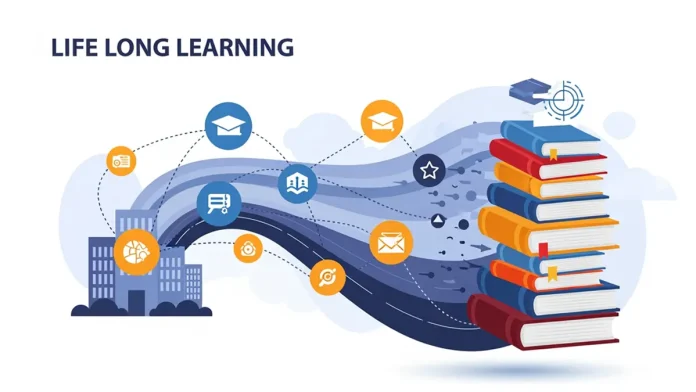
In today’s rapidly evolving education landscape, lifelong learning is no longer optional for educators. New technologies, changing curricula, and shifting student needs demand continuous growth. What has changed most dramatically is how that learning happens. Social media, digital platforms, and personalized learning environments now shape how teachers develop professionally beyond formal training sessions. To understand this shift, it helps to look at real world scenarios that show how educators engage with learning over time.
One powerful way to explore this idea is through three distinct lifelong learning profiles. Each represents a different approach to building a Personal Learning Environment and a Professional Learning Network. None of these paths is inherently right or wrong, but each comes with unique benefits and tradeoffs that influence both professional growth and personal wellbeing.
The first scenario is The Social Learner. This educator blends personal and professional learning within a single social platform. Sal, an elementary school teacher, uses Facebook not only to stay connected with family but also to follow colleagues and education related discussions. By sharing articles and observing others, he maintains a low pressure connection to professional learning. The advantage of this approach is simplicity. Everything happens in one familiar space, reducing cognitive overload and time spent managing multiple tools.
However, the limitations quickly become clear. Because personal and professional identities overlap, Sal self censors. He avoids controversial topics and limits authentic expression to prevent conflict. His network remains small and largely homogeneous, offering limited exposure to new perspectives. While convenient, this approach can unintentionally reinforce existing beliefs instead of encouraging growth.
The second scenario, The Seeker, reflects a more consumption focused model of lifelong learning. Marta, a secondary science teacher, curates a rich stream of information from platforms like YouTube, Pinterest, Twitter, and RSS feeds. Her digital ecosystem delivers constant updates on scientific discoveries, teaching strategies, and classroom ideas. This approach excels at keeping educators informed and current in their field.
The strength of The Seeker model lies in access. Marta never runs out of ideas or resources. Yet her biggest challenge is confidence. She rarely contributes her own insights, believing her voice lacks value. This passive participation, often referred to as lurking, limits the social benefits of professional learning. Without sharing, reflection remains internal and opportunities for collaboration are missed. Over time, this can create a sense of professional isolation despite constant connectivity.
The third scenario, The Micro Celebrity, represents the most visible and demanding form of lifelong learning. Rosa actively publishes blog posts, shares opinions on education policy, and engages large audiences across multiple platforms. Her work reaches tens of thousands of educators, amplifying her influence and positioning her as a thought leader. The benefits are significant. She gains diverse feedback, builds authority, and even explores monetization opportunities that supplement her teaching income.
Yet visibility comes at a cost. Managing online engagement consumes time and emotional energy. Boundaries between personal life, teaching responsibilities, and digital advocacy blur. Rosa sometimes finds her classroom decisions influenced more by online content creation than student needs. When professional identity becomes performance driven, sustainability becomes a serious concern.
Together, these scenarios highlight a critical truth. Lifelong learning is not one size fits all. It exists on a spectrum shaped by personality, goals, time, and values. Some educators thrive quietly, others through constant exploration, and some through public contribution. The key is intentional design. A strong Personal Learning Environment supports growth without burnout. A healthy Professional Learning Network challenges thinking without overwhelming it.
Modern web technologies give educators unprecedented control over how they learn, connect, and contribute. The challenge is not access, but balance. Educators must regularly reflect on whether their digital habits truly support learning or simply consume attention. Choosing when to observe, when to engage, and when to step back is itself a lifelong learning skill.
CONCLUSION
Lifelong learning defines effective teaching in the digital age. Whether educators identify as Social Learners, Seekers, or Micro Celebrities, growth depends on intentional choices. By thoughtfully building personal learning environments and professional networks, teachers can stay current, connected, and fulfilled while modeling the very learning mindset they hope to inspire in their students.