

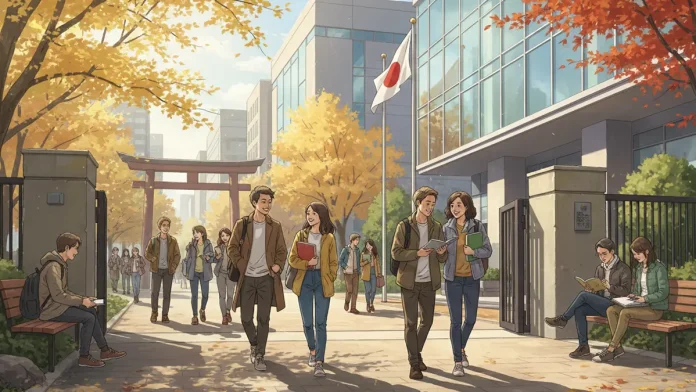
The air on university campuses in Tokyo and Kyoto has felt different this winter. For years, the official mantra was “internationalization”—a desperate, necessary push to fill lecture halls as Japan’s own birth rate plummeted. But as 2025 draws to a close, that open-door spirit is hitting a wall of “Japan First” politics. What was once a quiet academic concern has spilled into a loud, messy debate about who deserves a seat at the table.
A Fortress Mentality in the Lab
The most visible sign of this shift is the restructuring of the SPRING program, a massive funding lifeline for doctoral researchers. For a long time, it didn’t matter where you were from; if your research was good, the funding followed. Now, a “nationality clause” is moving through the Diet, aiming to restrict certain living expense grants to Japanese citizens only.
It’s a move that feels practical to some—especially those on social media pointing out the crushing debt domestic students carry—but for professors on the ground, it’s a disaster in slow motion. When you realize that 41% of all international students in Japan are Chinese, and that they dominate high-tech and art programs, the math starts to look grim. In some art schools, that number hits 70%.
“Signs of change, such as placing a priority on ‘Japan First’ policies, pose a threat to universities that are promoting diversity,” notes Tomoko Ako, a professor at the University of Tokyo.
The Demographic Paradox
The irony of this “fortress” turn is that Japan is running out of people to man the walls. By 2030, the country is staring down a shortage of nearly 800,000 workers in the IT industry alone. The very students being targeted by new, stricter residency requirements and funding cuts are the same ones aiming for jobs in Japanese gaming and tech firms.
Walking through a campus like Waseda or Keio, you still see the diversity, but there’s a new, wary energy. Prime Minister Sanae Takaichi’s administration has tied higher education closely to national security, viewing foreign influence—particularly from China—as a challenge to be managed rather than an asset to be cultivated.
While the government still uses words like “inclusion” on its websites, the policy reality is trending toward a “dispatch-first” model that prioritizes sending Japanese students abroad while tightening the belt for those coming in. It raises a haunting question for the next decade: can Japan actually afford to be this picky? If the lecture halls go quiet and the labs lose their best talent to more welcoming shores, “Japan First” might eventually mean Japan alone.