

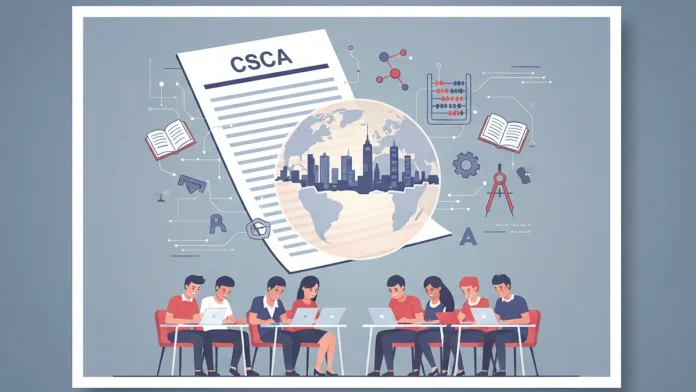
In December China quietly introduced something big. The China Scholastic Competency Assessment or CSCA is a test. It could change how students apply to universities around the world.
For a time students who wanted to study abroad took tests like the SAT or A-Levels. These tests were like a language that universities understood. China was different. It mainly used language scores like the HSK to decide who could come.
That is changing.
From 2026 students who want a Chinese Government Scholarship will need to take the CSCA. By 2028 all international students who want to study in China will need to take it. The timeline looks planned. It does not seem rushed or experimental.
The exam seems simple. It tests math, science and other subjects. Each subject is graded out of 100. Math is required for everyone students who want to study arts. This shows what China thinks is important. In China being good at math is not just nice to have. It is essential.
Students who took a practice test in October said it was intense. They had 90 minutes to answer 80 questions. The questions were not tricky. There was not much time to think. Students need to be fast and precise.
The bigger picture is hard to ignore. Since 2019 China has been focusing on getting students, not just more students. Before the goal was to have half a million students by 2020. Now China wants students who can help its universities be top-notch.
There is also an audience. Some people in China have complained that international students were accepted with standards and got generous scholarships. A standardized test like the CSCA shows that China is trying to be fair. Merit is supposed to be measurable.
Regionally the CSCA will first affect Asia. Students from Vietnam or India where math training is tough might find it easier. Others might struggle. Companies are already helping students prepare for the test. This raises concerns about fairness. The complicated the test the more it helps students who can pay for help.
The CSCA is mostly taken online. There are test centers in places like Vietnam and Thailand. The China Scholarship Council is in charge of it like the College Board in the US. This is not a coincidence. Whoever makes the test has power. When schools abroad start teaching to the test their curricula and teaching methods change.
There is a strategy here. The SAT and A-Levels helped spread British education around the world. If the CSCA becomes popular it could spread education too. For countries sending students to China this might be practical: rules, defined paths.
Still influence is not automatic. Universities outside China will watch closely. So will students deciding between Boston, London and Beijing.
In Asia guidance counselors are already changing their advice. A new acronym has appeared. Whether it becomes as common as the SAT depends on trust. In the tests fairness in the value of a degree and, in the opportunities that follow.